Dia de los Muertos is a day to celebrate our ancestors. Although people often say that Dia de los Muertos is primarily celebrated in Mexico, it is also celebrated throughout Latin America, just on different days or in different ways of saying the holiday. Here’s a little background: many people do many different things on Dia de Los Muertos in Mexico, such as ofrendas where they put photos of loved ones along with food on the ofrenda.
In El Salvador, it is called Dia de Los Fieles Difuntos. It is named differently, but it is celebrated almost the same as in Mexico, where they offer food as offerings, or they play music at the gravesites, and in Catalonia in Spain, where they eat and enjoy roasted chestnuts. This is primarily to show that this amazing holiday isn’t just celebrated in Mexico, as you have seen in the Disney film Coco or The Book of Life, or in other movies or in shows, but in other parts of Mexico too!
This is important because people should also understand that this holiday is also important to people in other parts of Latin America and sometimes even in Europe.
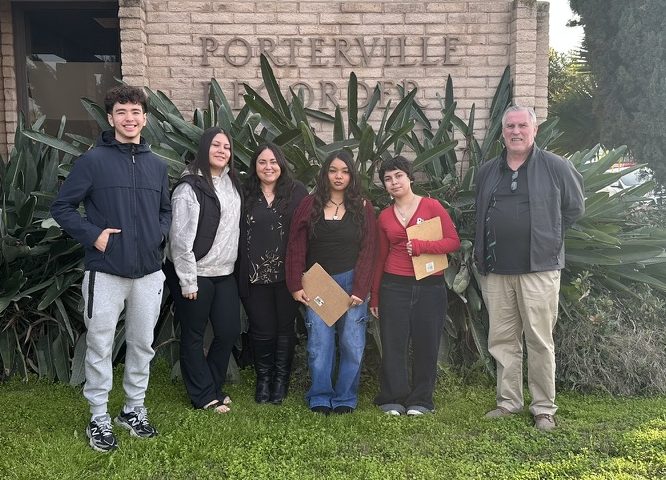
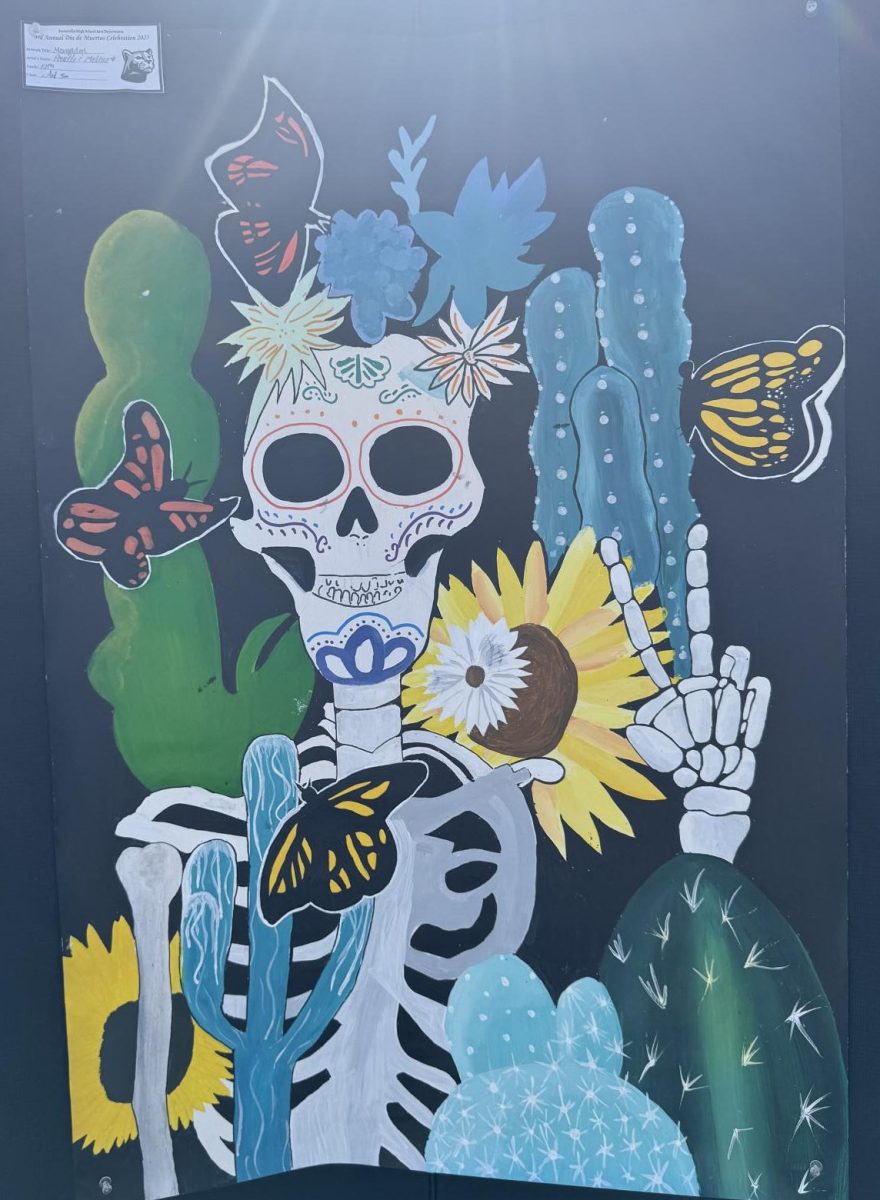
“It’s mostly from Mexico, but it is also from all over Latin America,” Mrs. Hernandez says. The PHS Visual and Performing Arts (VAPA) teachers decided to put on this fantastic holiday at school by showing ceramic candy skulls (made by Mrs. Hernandez’s students), choir students singing, some very fantastic art (made by Mrs. Rojas’s students), and a traditional dance from Latin America by the dance students. To many students, this holiday would be important because most of our school is made up of Latinos from all over Latin America.
According to the PUSD official website, 85.6% of people are Hispanic or Latino in Porterville High School. So, celebrating this event must mean a lot to most of the people at our school. This is why Mrs. Rojas and Mrs. Hernandez found it so important to host this event. They wanted to inspire more appreciation for Latin American culture and to help students understand the deeper meaning. Mrs. Hernandez made an amazing point by saying, “My parents immigrated from Mexico, and they came here and they started to lose tradition. This is kind of a way of circling back to our roots.”
This is very important since most of our students are Latino, and some do start to lose tradition or are not familiar with traditions around Dia de Los Muertos. “How do you envision this Dia de Los Muertos event fosters a deeper understanding and appreciation for high school students at PHS” Cienna asks, Mrs. Roja responds with “Everyone is participating in some way, like choir who has never sang in Spanish, it’s their 2nd year singing and they’re not all Latinos They learn new language through art or dance so it’s just giving them an opportunity to showcase culture in a different way, I don’t think we ever get to see it, it’s like we are all part of it.” Rojas explains it perfectly when she says “It’s like we’re all part of it,” which is true it’s not just the Latinos at PHS who are part of it or participating, everyone is, everyone gets to discover new culture they’ve never seen and many of the our students get to learn and be part of such an amazing and memorable event which shows more diversity into Latin American culture making it a significant and memorable event not just everywhere but at our school.
“I like that we put this together so they (the students) can understand where the traditions came from and how people celebrate it in different ways, so it shows diversity. My choir students and I love the language & awe brought on this holiday,” added Mrs. Klippenstein, who also helped in setting up and celebrating this amazing day with us with her amazing choir. In all, in celebrating Día de los Muertos at our school, we not only honor the rich traditions and memories of those who have passed, but also embrace the importance of community, culture, and remembrance.
This vibrant celebration showcases how different cultures come together to honor loved ones in meaningful ways. It’s a beautiful reminder of how we can keep those who have passed alive in our hearts and minds through shared traditions and respect. As we continue to observe this special day, let’s cherish the opportunity to learn, celebrate, and honor the enduring connections that unite us all across different cultures.